



Cleopatra VII is often depicted through Hollywood’s lens as a glamorous seductress, but her true legacy lies in her extraordinary intellect, strategic mind, and diplomatic mastery. As Egypt’s last pharaoh, she navigated a turbulent world of shifting alliances, internal intrigue, and external threats with resilience and wit. Her fluency in multiple languages, scholarly pursuits at Alexandria’s famed library, and ability to blend Greek and Egyptian traditions reveal a leader whose power was rooted in knowledge and cultural versatility. Her alliances with Julius Caesar and Mark Antony were calculated moves, demonstrating her strategic acumen rather than mere romantic exploits. This portrayal challenges the myth of beauty overshadowing brains, highlighting how her leadership exemplifies resilience, continuous learning, and adaptability. Today, Cleopatra’s legacy encourages us to see influence not just in titles or appearances but in the strength of a curious, informed mind capable of shaping history—an inspiring reminder for modern leadership and global diplomacy.
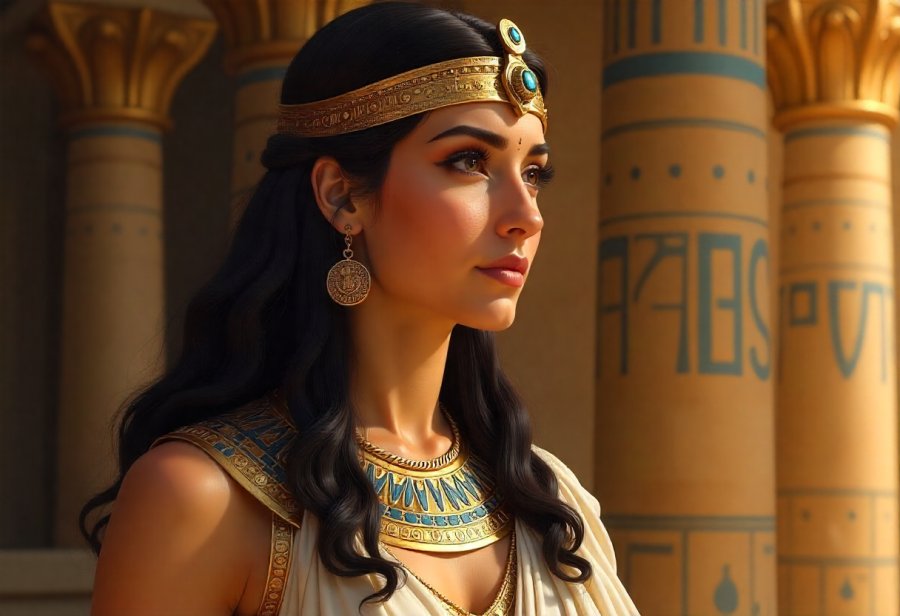
Unveiling Cleopatra: The Mind Behind the Myth
Cleopatra VII is often remembered through Hollywood’s lens as a glamorous seductress, but her true legacy runs much deeper. She was a remarkable leader whose strength came from her sharp mind, political savvy, and strategic thinking. As Egypt’s last active ruler of the Ptolemaic dynasty, she navigated a world of shifting alliances, rival empires, and internal struggles. Instead of relying on her royal title or appearance alone, Cleopatra used her intelligence and diplomatic skills to protect her kingdom’s independence and stability.
What truly set Cleopatra apart was her ability to govern with a keen understanding of politics and human nature. She was a scholar as much as she was a queen, fluent in multiple languages and deeply engaged with science, philosophy, and governance. Her education took place in Alexandria, home to the legendary Library of Alexandria, which nurtured her curiosity and love for learning. This intellectual foundation helped her develop a nuanced leadership style—one that combined cultural insight with strategic diplomacy.
Her leadership was also rooted in her mastery of ancient political strategy. Cleopatra knew how to leverage relationships and symbolism to reinforce her authority. Her alliances with Julius Caesar and Mark Antony weren’t just personal choices—they were calculated moves aimed at restoring her throne and securing Egypt’s future. Her ability to adapt her diplomatic tactics to changing circumstances demonstrated a level of political finesse that outshone many of her contemporaries. She understood that influence depended not only on military strength but also on cultural awareness and timely decision-making.
Her background as a Macedonian ruler added another layer to her brilliance. The Ptolemaic court was known for intrigue and diplomacy, but Cleopatra redefined these traditions through her resilience and intelligence. She skillfully blended Greek customs with Egyptian traditions, knowing that cultural versatility was key to maintaining her power. Her leadership was an ongoing balancing act—honoring tradition while innovating to meet new challenges. Her ability to think critically and act decisively made her a formidable figure in a turbulent era.
In essence, Cleopatra’s story reminds us that true leadership isn’t just about titles or beauty. It’s about the capacity to think critically, learn continuously, and adapt to ever-changing circumstances. Her legacy demonstrates that influence and power come from the mind—qualities of resilience, wit, and strategic foresight. Her life encourages us to see leadership as an ongoing journey of growth, where intelligence and adaptability are the greatest assets for leaving a lasting mark on history.
From Alexandria to the Throne: Cleopatra’s Origins and Rise
Cleopatra was born around 69 BCE into the Macedonian Ptolemaic dynasty that ruled Egypt after Alexander the Great’s empire fragmented. Growing up in Alexandria, she was immersed in an environment rich in learning and cultural exchange. Unlike many royal children, her education went far beyond basic court training—she studied history, philosophy, mathematics, and multiple languages. Some sources suggest she spoke Greek, Egyptian, and possibly other dialects, giving her a distinct advantage in diplomacy and governance.
Her linguistic skills and scholarly pursuits set her apart early on. Being fluent in several languages allowed her to communicate directly with a diverse range of audiences—from Greek courtiers to Egyptian priests—without relying on interpreters. This ability enhanced her diplomatic reach and helped her build crucial alliances. Her exposure to Alexandria’s famed Library, a hub of knowledge and innovation, deeply influenced her approach to leadership—emphasizing the importance of learning and intellectual curiosity.
The path to the throne was anything but straightforward. When her father, Ptolemy XII, died in 51 BCE, Cleopatra found herself co-ruler with her younger brother, Ptolemy XIII. The succession was riddled with rivalry and court intrigue, typical of the Ptolemaic court’s complex politics. Cleopatra quickly realized that survival depended on her ability to forge strategic alliances and demonstrate her political acumen. Her intelligence and understanding of both Egyptian traditions and Greek customs helped her position herself as a legitimate ruler amidst chaos.
Gaining and maintaining power required boldness as much as wit. Cleopatra’s cleverness became evident in her ability to navigate court rivalries and external threats. Her alliance with Julius Caesar in 48 BCE marked a turning point—achieved through daring moves, including the legendary story of her being smuggled into Alexandria rolled inside a rug. This audacious act helped her reclaim her throne after her brother’s rejection. Throughout her rise, her leadership was rooted in quick thinking, adaptability, and leveraging her scholarly background into practical strategy.
Her Macedonian heritage added a layer of resilience and diplomatic savvy. The Ptolemaic court was known for intrigue and courtly diplomacy, but Cleopatra redefined these traditions through her resilience and intelligence. She skillfully blended Greek customs with Egyptian traditions, understanding that cultural versatility was key to maintaining her authority. Her ability to think critically and act decisively made her a formidable figure, capable of navigating turbulent political waters with grace and strategic insight.
Cleopatra’s ascent underscores that leadership isn’t just inherited or based on appearance. It’s about the capacity to learn, adapt, and think critically under pressure. Her early experiences laid the groundwork for her remarkable reign, proving that intelligence and resilience are vital tools for navigating chaos and securing lasting influence. Her story remains a testament to the power of knowledge, boldness, and strategic foresight.
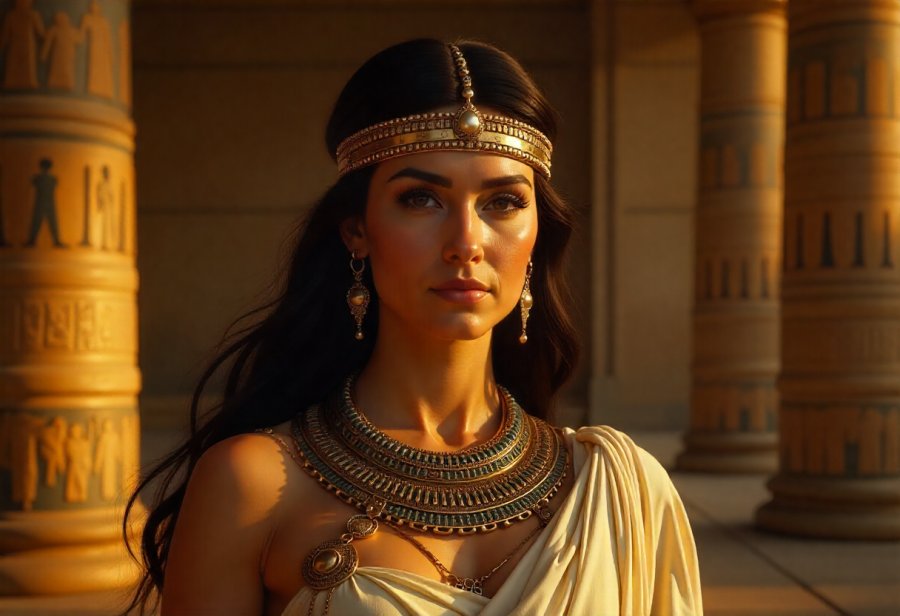
Legacy of a Legend: How Cleopatra Shaped History
Cleopatra’s leadership and sharp intellect left a legacy that continues to shape our understanding of influence and power long after her time. Her ability to govern through diplomatic finesse, strategic alliances, and cultural insight didn’t just preserve Egypt’s independence temporarily; it set a high standard for female leadership rooted in wisdom and resilience. Her impact extends beyond her reign, inspiring generations to see leadership as a blend of intelligence, adaptability, and cultural awareness—traits that remain vital today.
Her story isn’t solely about political achievements but about the lessons she imparts. Cleopatra proved that influence isn’t based solely on military might or royal privilege, but on making informed decisions, understanding cultural nuances, and building genuine trust. Her resilience in turbulent times demonstrates that true power flows from a mind capable of strategic thinking and adaptation, even amid overwhelming odds. Her ability to remain resilient under pressure continues to serve as a model for modern leaders facing complex global challenges.
Throughout history, Cleopatra has become a symbol of female leadership that defies stereotypes. She showed that women could be formidable strategists, diplomatic tacticians, and cultural innovators. Her mastery of language, patronage of scholarship, and talent for forging alliances highlight the enduring importance of intellect and cultural literacy in maintaining influence. Her story adds a powerful chapter to the ongoing narrative of women leading with strength, wit, and resilience, breaking barriers and inspiring future generations.
Modern scholars and leadership thinkers still study her life, uncovering new insights into her strategic brilliance and cross-cultural leadership. Recent archaeological discoveries and reinterpretations challenge outdated myths, revealing her as a forward-thinking scholar deeply engaged in science, philosophy, and diplomacy. These findings emphasize how her curiosity and pursuit of knowledge directly contributed to her effective governance, even amid external threats and internal unrest. Cleopatra’s legacy encourages us to value continuous learning and adaptability as keys to enduring influence.
Her life exemplifies that true influence comes from cultivating a curious, well-informed mind. Cleopatra’s ability to blend intelligence with resilience allowed her to outmaneuver much larger powers and leave an indelible mark on history. Her story reminds us that leadership rooted in knowledge, cultural awareness, and strategic thinking can transcend time and circumstance, offering lessons that remain relevant in today’s interconnected world. Her legacy is a testament to the enduring power of the mind in shaping history.
Lessons from Cleopatra: Leadership and Strategy in Action
Cleopatra’s leadership offers a wealth of practical lessons that resonate even today. One of the most vital is her ability to adapt quickly to changing circumstances. Whether facing shifting alliances or internal unrest, she demonstrated resilience and flexibility, understanding that rigid strategies could lead to disaster. Her daring move to meet Julius Caesar secretly—an act of bold problem-solving—turned a fragile situation into an opportunity to reclaim her throne. Leaders today can emulate her by maintaining openness to new approaches and staying calm under pressure.
Building genuine relationships through cultural understanding and effective communication was another cornerstone of her success. Her fluency in multiple languages and her knowledge of Egyptian and Greek customs allowed her to connect authentically with diverse audiences. Cleopatra knew that influence relied on shared values and trust, not just authority. Modern leaders can learn from this by valuing cultural literacy and active listening, which foster loyalty and collaboration rather than mere compliance.
She also understood the power of symbolism and religious authority. Cleopatra used rituals and iconography to reinforce her divine status and legitimacy, cultivating loyalty among her people. Today’s leaders can take a page from her playbook by managing perceptions carefully and leveraging shared symbols to strengthen their influence. When influence is rooted in a deep understanding of cultural and social dynamics, it becomes more sustainable and meaningful.
Her strategic alliances, such as those with Julius Caesar and Mark Antony, highlight the importance of timing and risk-taking. Cleopatra knew when to negotiate, when to assert her influence, and how to seize opportunities for maximum impact. Her willingness to take calculated risks—like her legendary entrance into Alexandria—often shaped her success. Modern leaders can draw inspiration from her boldness, balancing daring moves with thoughtful planning to secure long-term stability.
Throughout her reign, Cleopatra’s scholarly pursuits played a crucial role. Her patronage of the Library of Alexandria and her own studies in astronomy, mathematics, and philosophy reflect her commitment to continuous learning. Staying informed and curious enabled her to make smarter decisions and anticipate future challenges. Today, embracing a mindset of ongoing education and curiosity gives individuals and organizations a competitive edge in a rapidly evolving world.
Her ability to blend intelligence with resilience shows that influence isn’t solely about power or privilege but about the capacity to think critically and adapt. Cleopatra’s example demonstrates that leadership rooted in knowledge and strategic foresight can outmaneuver larger adversaries and leave a lasting legacy. Cultivating curiosity, cultural awareness, and a willingness to learn can empower modern leaders to navigate complex landscapes with confidence.
Finally, Cleopatra’s life underscores that true influence stems from the mind. Her intellectual curiosity, cultural agility, and strategic thinking made her a formidable force whose impact endures. Her example encourages us to invest in learning, remain adaptable, and approach challenges as opportunities for growth. In doing so, we honor her legacy—one that proves the greatest power lies in a curious, well-informed mind capable of shaping history.
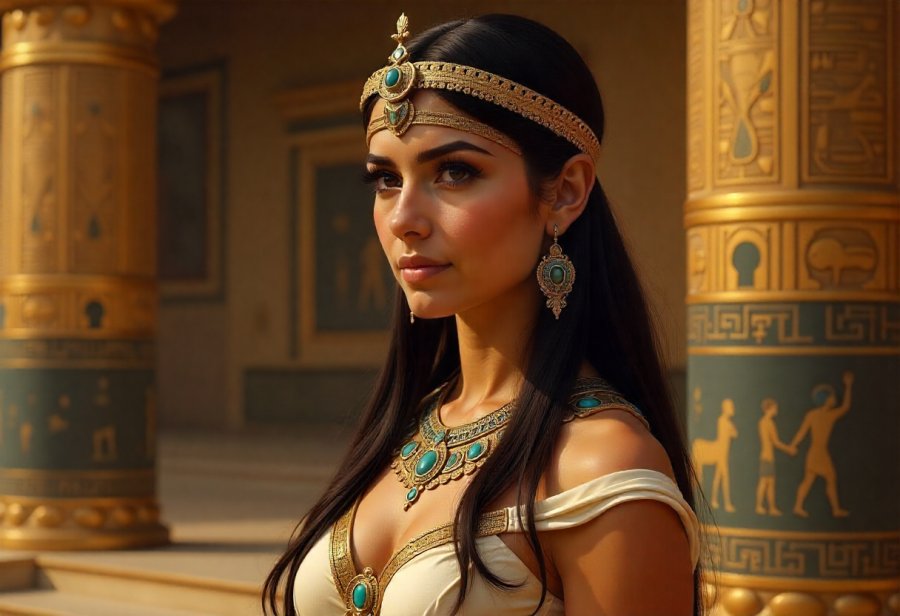
Looking Ahead: The Enduring Wisdom of Cleopatra’s Intellectual Legacy
Ongoing research and renewed admiration of Cleopatra’s intellectual legacy continue to deepen our understanding of her as a pioneering leader. Recent archaeological discoveries—ranging from inscriptions to personal writings—challenge outdated myths and reveal her as a forward-thinking scholar deeply engaged in science, philosophy, and diplomacy. These new insights highlight how her curiosity and pursuit of knowledge directly contributed to her effective governance amid external threats and internal unrest. As scholars piece together her life from emerging sources, Cleopatra emerges not just as a legendary figure but as an innovative thinker whose ideas and strategies remain relevant today.
This evolving picture inspires modern leaders and thinkers to value continuous learning and intellectual agility. Cleopatra’s example underscores that knowledge isn’t merely a tool of influence; it’s the foundation for resilience and adaptability. Her mastery of multiple languages, patronage of the arts and sciences, and her ability to pivot her leadership approach in changing circumstances demonstrate that curiosity and education can be transformative. In a world characterized by rapid technological advances and cultural shifts, her legacy encourages us to stay curious, challenge assumptions, and embrace lifelong learning as keys to staying ahead.
Furthermore, fresh research sheds light on her innovative diplomacy and cross-cultural leadership. Cleopatra’s capacity to blend Greek and Egyptian traditions, while leveraging her scholarly pursuits, set a precedent for modern cross-cultural influence. Her talent for building alliances through shared knowledge, religious symbolism, and mutual respect shows that understanding and valuing diverse perspectives can be a powerful form of influence—much like it was in her time. These lessons remind us that cultural literacy and the ability to adapt are crucial in today’s interconnected world, where influence often depends on navigating complex social and cultural landscapes.
Looking ahead, continued exploration of Cleopatra’s life promises to deepen our appreciation of her as a trailblazer in leadership. Future archaeological finds and scholarly work are likely to uncover even more about her personal interests, diplomatic finesse, and role as a cultural innovator. These discoveries will further cement her reputation as a model of intellectual resilience—someone who used her curiosity and knowledge not just to hold power but to shape history. Her story inspires ongoing reflection on how leadership rooted in learning and adaptability can create a legacy that endures well beyond a single era.
Ultimately, Cleopatra’s enduring influence rests on her unique ability to combine intelligence with resilience. Her life invites us to see leadership as an ongoing journey of discovery, where curiosity and a willingness to learn are as vital as strategic thinking. Embracing her legacy means recognizing that the most powerful impact comes from a mind eager to grow, question, and innovate. Her example continues to inspire individuals and leaders alike to invest in knowledge, cultural understanding, and adaptability—traits that remain essential for navigating today’s complex, ever-changing world. In doing so, we honor her enduring message: true influence is built on a curious, well-informed mind capable of shaping history.